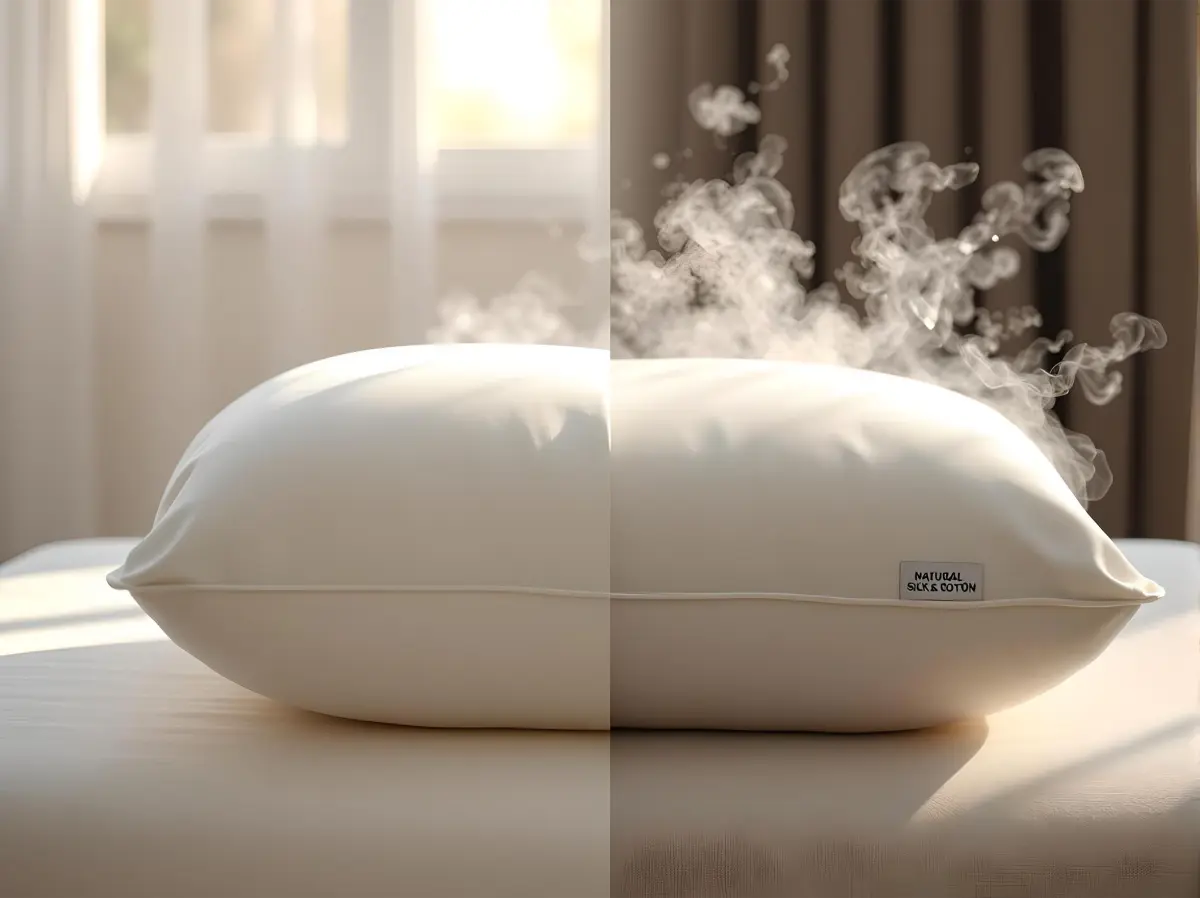
Support your respiratory health with the perfect pillow for restful, clear breathing.
Breathe Easier Every Night
Support your respiratory health with the perfect pillow for restful, clear breathing.
How Synthetic Pillow Materials Like Memory Foam and Polyester Can Trigger Asthma and Bronchitis (Science-Backed)
Many people don’t realize that the pillow they sleep on every night could be contributing to respiratory issues like asthma and bronchitis. Scientific research has shown that synthetic pillow materials – including memory foam, polyester, and polyurethane – can release harmful chemicals and harbour allergens that exacerbate asthma, impair the airway and cause airway inflammation.
The Hidden Dangers in Your Pillow
1. Volatile Organic Compounds (VOCs) and Skin Irritation
Memory foam and polyurethane pillows are made from petroleum-based chemicals that release volatile organic compounds (VOCs) through a process called off-gassing. These chemicals include:
Diisocyanates (TDI and MDI): Used in polyurethane production, these are known respiratory irritants that can cause occupational asthma
Formaldehyde: A known carcinogen that can also irritate airways and trigger asthma attacks
Methylene dianiline: Another respiratory irritant used in foam manufacturing
Flame Retardant Chemicals
Most mattresses and pillows contain flame retardants. Common ones include:
Polybrominated diphenyl ethers (PBDEs): Linked to respiratory issues and developmental problems.
Boric acid: Can damage respiratory organs.
Melamine compounds: Often contain formaldehyde.
These chemicals continue to release gases over time and can be especially problematic for people with existing respiratory conditions.
How Synthetic Pillows Trigger Respiratory Issues
1. Direct Chemical Irritation
The chemicals in synthetic pillows can directly irritate the respiratory tract, leading to:
Scientific evidence clearly shows that synthetic pillow materials like memory foam, polyester, and polyurethane can contribute to respiratory issues including asthma and bronchitis through:
Chemical off-gassing
Flame retardant exposure
Allergen accumulation
Heat and moisture retention
For better respiratory health, consider switching to natural, organic pillow materials that don’t contain these harmful chemicals. Your lungs will thank you.