Reduce exposure to harmful toxins and help safeguard your DNA while you sleep.
Protect What Matters Most
Reduce exposure to harmful toxins and help safeguard your DNA while you sleep.
Synthetic Pillow Fillings & DNA Damage
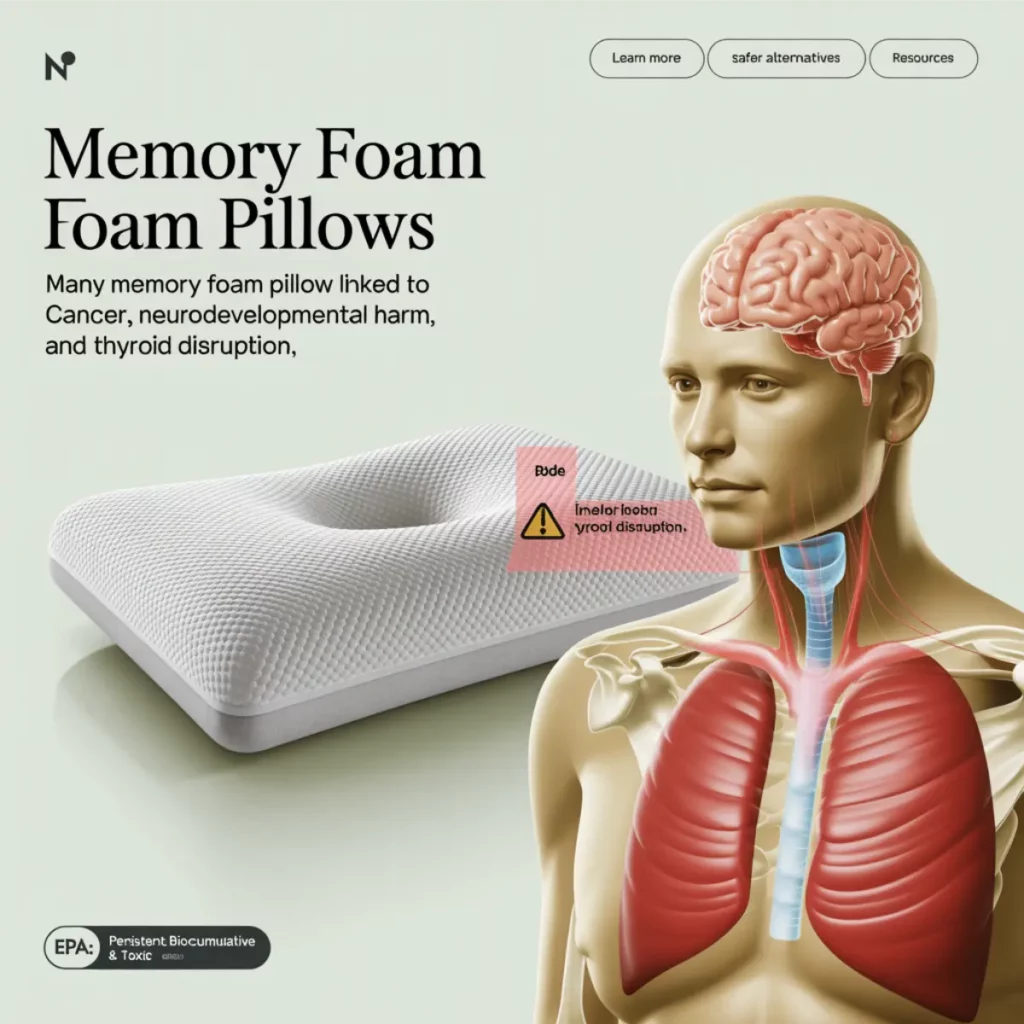
Many popular synthetic pillows—especially memory foam, polyester, and polyurethane foam—contain chemicals that off-gas and may seriously harm human health. Below is a breakdown of the most concerning substances and the science behind their risks:
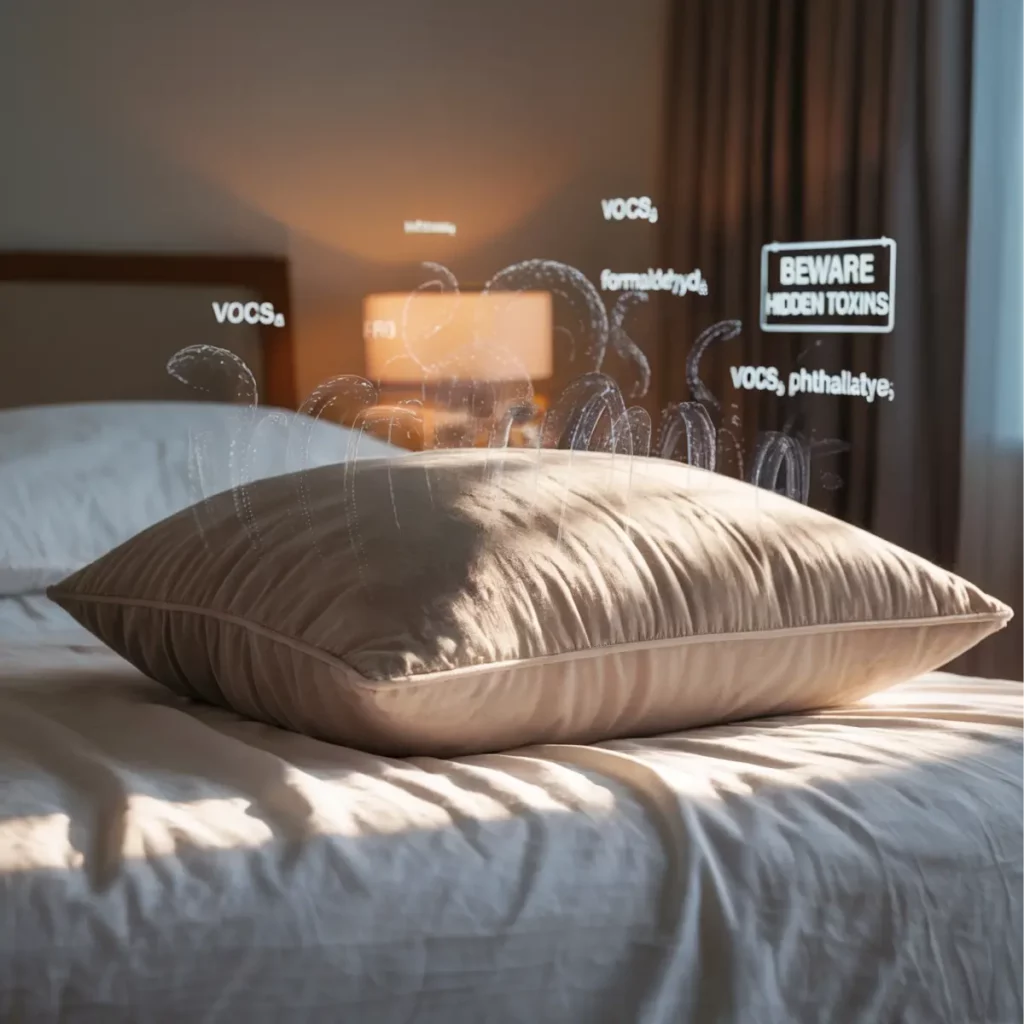
VOCs like benzene and toluene from foam off-gassing can cause immediate irritation and, over time, damage the liver, kidneys, central nervous system, and potentially increase cancer risk .
Formaldehyde, used in some foam and textile treatments, is a Group 1 human carcinogen (IARC). It causes eye, nose, and throat irritation and can contribute to DNA damage .
3. Phthalates & Nonylphenols in Synthetic Fillings
These chemicals, commonly used in plastics like PVC, act as plasticizers and flame retardants.
Studies show that nonylphenol can damage DNA in immune cells (theguardian.com).
Phthalates are associated with hormone disruption, reproductive toxicity, and possibly genetic damage (rosycheeked.com).
4. Heavy Metals & Pesticides in Synthetic Textiles
Though studies have focused on textiles, the implications also extend to synthetic bedding:
Heavy metals (lead, chromium, nickel) used in textile dyes can leach out over time and are linked to DNA damage, carcinogenicity, and oxidative stress.
Flame retardants like tris(2,3‑dibromopropyl) phosphate were withdrawn from children’s pajamas after being shown to be mutagenic in lab studies (openaccessgovernment.org).
PFAS (“forever chemicals”) used for stain-resistance accumulate in the body; while evidence of direct DNA damage is limited, they’re linked to serious health impacts including cancer (openaccessgovernment.org).
What the Science Actually Shows
Genotoxicity: Formaldehyde, PBDEs, nonylphenol, and heavy metals have been demonstrated to damage DNA in lab and animal studies .
Mechanisms: These chemicals can induce oxidative stress, chromosomal mutations, strand breaks, DNA adducts, and epigenetic alterations .
Real-world exposure: Off-gassing from pillows leads to long-term low-level exposure, increasing health risks over time.
Conclusion
Science clearly shows that synthetic pillow fillings—especially those containing foam or plastic fibres—can release harmful chemicals that damage DNA and increase the risk of cancer, hormonal disruption, and respiratory irritation. If you care about long-term health, it’s wise to prioritize natural, certified materials over synthetic alternatives.
Supporting Scientific Studies & Reports
IARC Group 1 carcinogen classification for formaldehyde in textiles (sciencedirect.com)
PBDE’s link to hormone disruption & DNA damage, cited by EWG & Dr. Axe
Nonylphenol’s mutagenic effects in lab experiments (theguardian.com)