
How Synthetic Pillow Materials Can Cause Eye, Nose & Throat Irritation (Science-Backed)
Many people experience unexplained eye, nose, and throat irritation without realizing their pillow may be the culprit. Scientific research reveals that common synthetic pillow materials – including memory foam, polyester, and polyurethane – release chemicals that can directly irritate sensitive mucous membranes.
The Chemical Culprits in Your Pillow
Volatile Organic Compounds (VOCs) and Off-Gassing
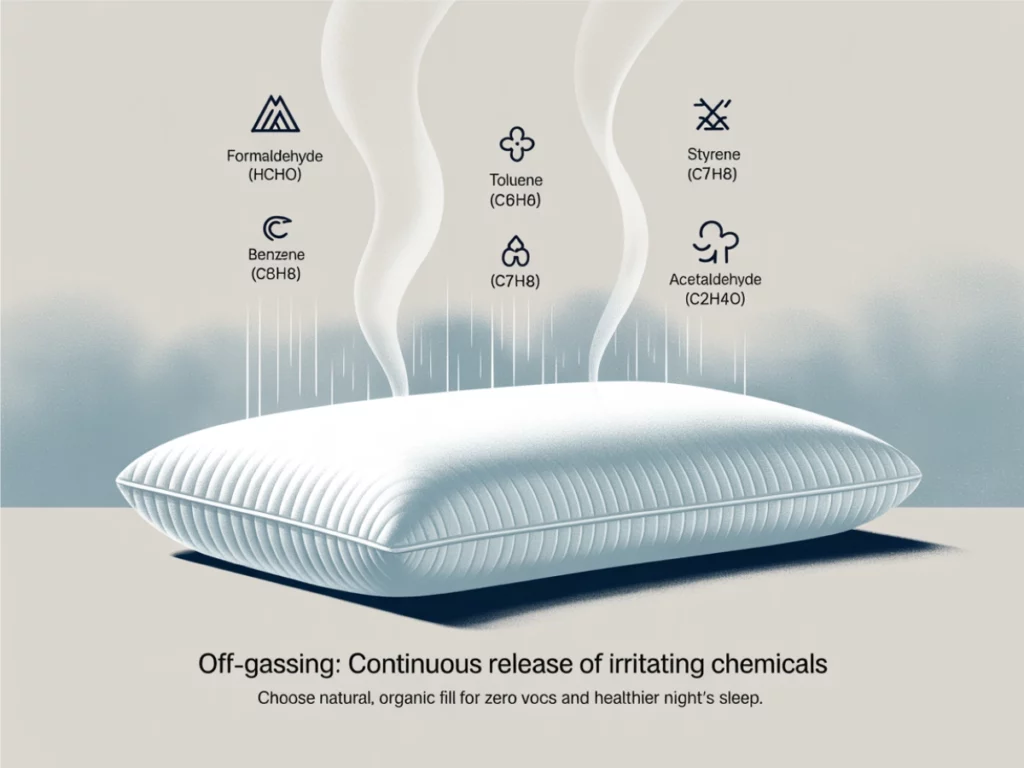
Memory foam and polyurethane pillows undergo continuous “off-gassing,” releasing potentially irritating chemicals including:
- Toluene diisocyanate (TDI) and methylene diphenyl diisocyanate (MDI): Used in polyurethane production, these are known mucous membrane irritants
- Formaldehyde: A potent irritant that can cause burning sensations in eyes, nose and throat
- Benzene derivatives: Linked to mucosal inflammation
- Acetone: Can dry out and irritate mucous membranes
“Within days of getting a memory foam pillow, I developed persistent eye irritation, a scratchy throat, and nasal congestion. Symptoms disappeared when I switched back to my old pillow.” – Consumer report
Flame Retardant Chemicals
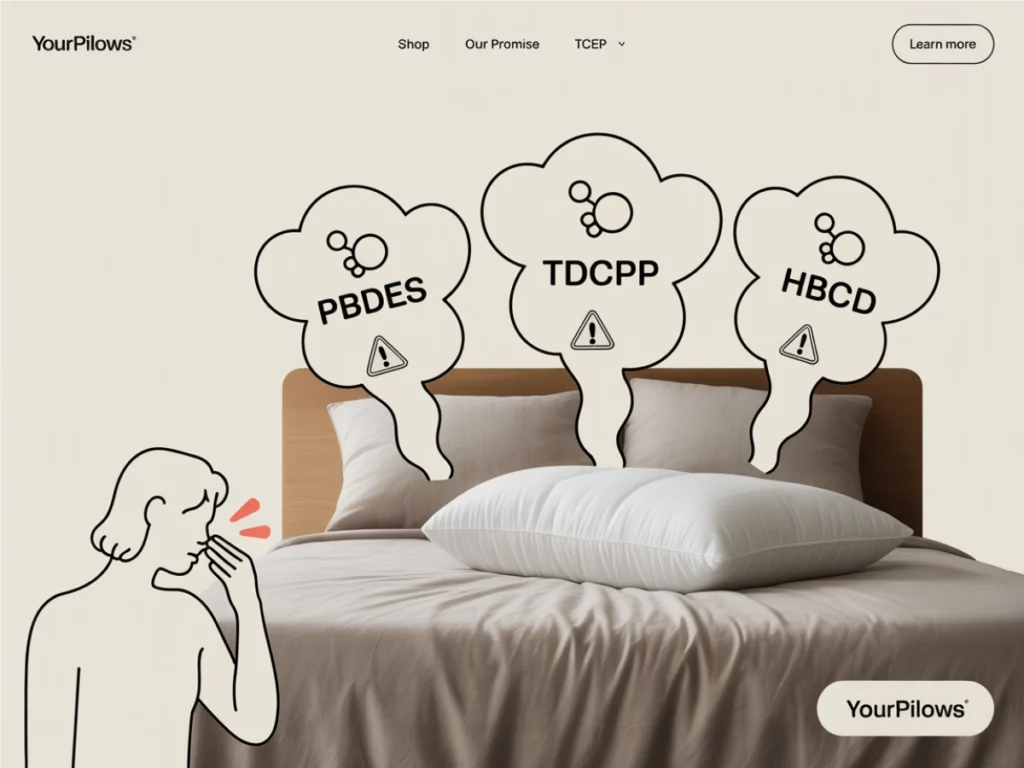
Most synthetic pillows contain legally mandated flame retardants that can irritate sensitive tissues:
- Organophosphate flame retardants: Known to cause eye and respiratory tract irritation
- Boric acid: Can cause redness and irritation of eyes
- Chlorinated tris: Associated with mucous membrane irritation
Scientific Evidence Linking Pillows to Mucosal Irritation
Multiple studies confirm the connection between synthetic pillow materials and irritation:
- EPA warns that isocyanates in polyurethane can cause “irritation to the eyes, nose, throat”
- ATSDR reports formaldehyde exposure leads to “burning sensation in the eyes, nose, and throat”
- European Chemicals Agency classifies TDI as causing “serious eye damage” and “respiratory irritation”
- CDC notes that VOC exposure from foam products can result in “eye, nose, and throat irritation”
- Clinical study found memory foam pillows emitted chemicals causing ocular and upper respiratory irritation in sensitive individuals
How Synthetic Pillows Cause Irritation
1. Direct Chemical Exposure
When you breathe near synthetic pillows for 6-8 hours nightly, you’re exposed to:
- Airborne VOC particles that land on eye surfaces
- Gases that are inhaled through the nose
- Chemical residues that can transfer to facial skin


2. Allergen Accumulation
Synthetic materials attract and trap:
- Dust mite allergens (a major cause of allergic conjunctivitis)
- Mold spores (can irritate eyes and nasal passages)
- Chemical residues from laundry detergents
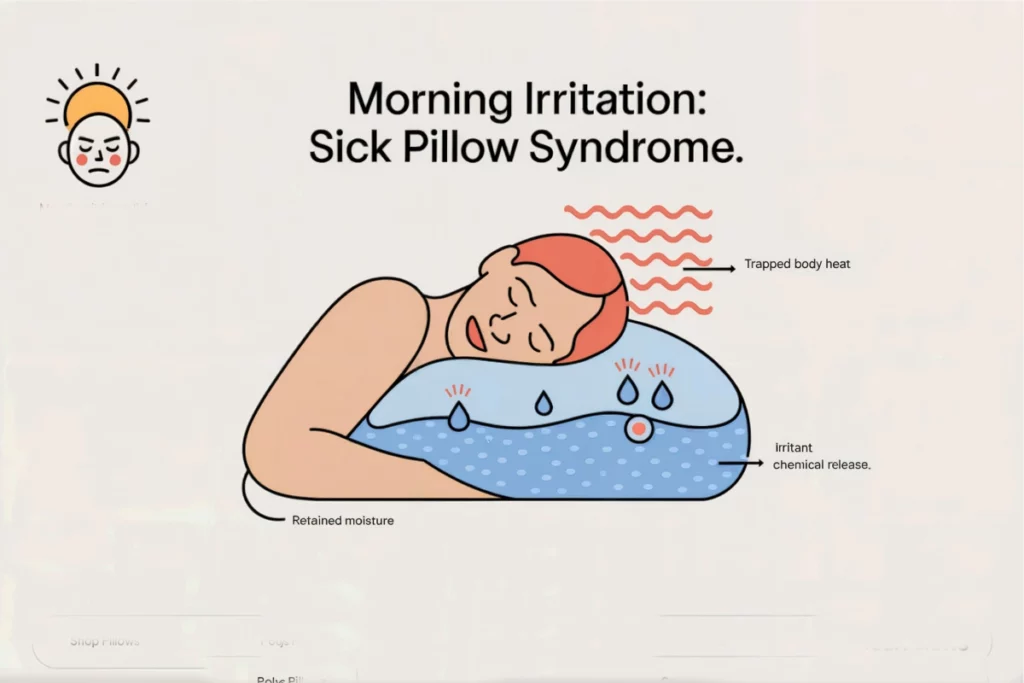
3. Heat and Moisture Factors
Memory foam and polyester:
- Trap body heat near your face
- Retain moisture from breath and sweat
- Create ideal conditions for irritant chemical release
- Can cause “sick pillow syndrome” with morning irritation symptoms
Most Vulnerable Groups
Some people are more likely to experience irritation:
- Contact lens wearers: More sensitive to eye irritation
- Allergy sufferers: Heightened mucosal sensitivity
- Children: More susceptible to chemical irritants
- Elderly: Often have drier, more sensitive mucous membranes
- People with dry eye syndrome: Less protective tear film
- Those with chronic rhinitis: Already inflamed nasal passages
Symptoms to Watch For
Common signs your pillow may be causing irritation:
- Eyes: Redness, burning, itching, watery eyes upon waking
- Nose: Congestion, sneezing, runny nose, burning sensation
- Throat: Scratchiness, dryness, soreness, morning cough
- Face: Itching, tingling, or mild swelling of facial skin
“I woke up every morning with bloodshot eyes and a sore throat. After switching to an organic latex pillow, these symptoms completely resolved within a week.” – Consumer testimonial
Safer Pillow Alternatives
For those experiencing irritation, consider these natural options:
- Organic cotton pillows: Breathable and chemical-free
- Wool pillows: Naturally resistant to dust mites and mold
- Kapok fibre pillows: Hypoallergenic plant-based filling
The Bottom Line
Scientific evidence clearly shows that synthetic pillow materials can release chemicals that irritate the eyes, nose and throat through:
- Continuous VOC off-gassing
- Flame retardant exposure
- Allergen accumulation
- Heat/moisture-related chemical release
For those experiencing unexplained morning irritation, switching to natural pillow materials may provide significant relief.